Women’s Month has become synonymous with special discount offers, celebrations and beauty treatments. We have instead used the month of commemoration to inspire deeper reflection: on the seats we occupy, how we use our influence and the legacy we leave for future generations of women. Zwelethu Nkosi shares the essence of our campaign.
Faldela Williams. Dr Maria Wilman. Bettie Cilliers-Barnard. Nokutela Mdima-Dube. Dolly Rathebe.
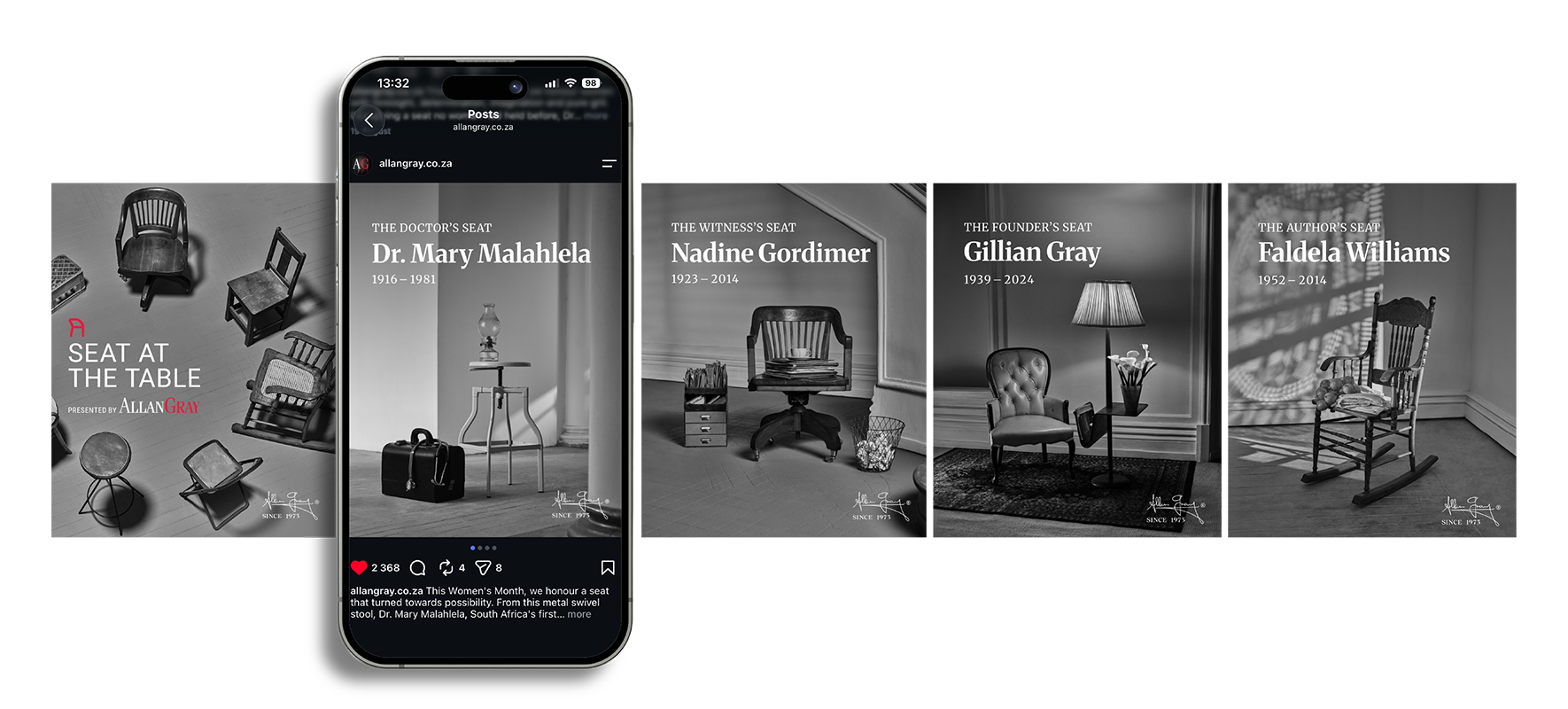
You could be forgiven for not recognising all these names. For the most part, they were not broadly known in South African households, nor were they women who occupied positions of obvious power. Yet each used the seat she occupied to achieve something remarkable. The mostly untold stories of these women, and others, are told in our recent campaign, A seat at the table, which can be seen on LinkedIn and Instagram.
The campaign uses the power of narrative to encourage every woman to recognise that influence is not defined by title or position, and that even the most ordinary seats can be used to do extraordinary things. The featured stories are a reminder that history is often shaped not only by those in the spotlight but also by individuals whose contributions quietly empower generations that follow.
The story behind A seat at the table
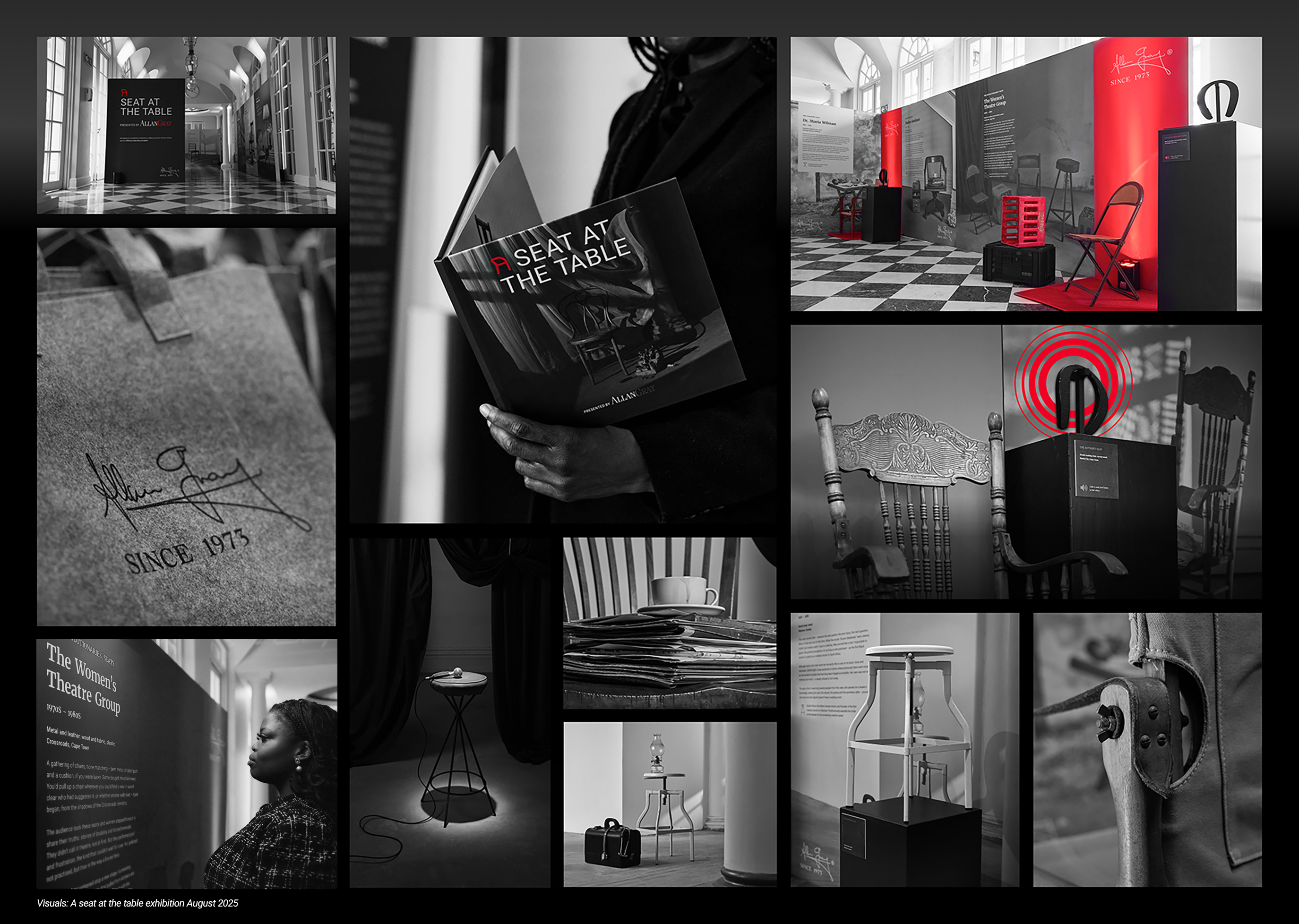
The first iteration of the campaign, created in collaboration with Accenture Song, played out in August 2025 in the form of a curated exhibition featuring photography and immersive physical and audio installations and centred on a selection of chairs. Each seat was linked to a woman whose work helped shape South Africa's social, political and economic landscape. Drawing on the legacy of figures such as the women who marched to the Union Buildings against pass laws in 1956, the installation used the symbolism of the seat to honour women who challenged exclusion and expanded opportunity for those who followed. The installation was the only South African campaign to win a highly coveted D&AD Pencil award in 2026, which is an international competition that recognises outstanding storytelling work through design.
The idea of the campaign was inspired by the late Mrs Gillian Gray, co-founder of Allan & Gill Gray Foundation, alongside her husband Mr Allan W B Gray, who founded Allan Gray Proprietary Limited. Mrs Gray empowered the people around her and the campaign aimed to honour her in a way that captured her personality and the impact of her philanthropy. Her influence lives on through her philanthropic endeavours.
The idea took root and A seat at the table was born to showcase the depth and breadth of women across all walks of life in South Africa. Many of the women who helped shape South Africa's social, cultural, educational and economic landscape are absent from mainstream narratives. Yet their contributions remain deeply relevant today.
When the opportunity came to do a Women’s Month campaign, we recognised that we had a chance to shed light on the courage, bravery and leadership that the women of 1956 showed. Our hope is that this campaign is used not only as a reflection, but also for introspection – to think about the seats we occupy and how we use them.
Using the power of narrative to spark conversation
The 2026 social media campaign tells the stories of remarkable women in a way that reflects Allan Gray’s distinctive storytelling style, grounded in human truths and compelling narratives.
We approach each advertising campaign as an opportunity to move conversations around values forward in a meaningful and thought-provoking manner. We believe values never go out of style, and that our advertising campaigns will impart powerful messages for generations to come.
Over the past two decades, Allan Gray’s advertising campaigns have explored territories such as the inherent power in human potential, the value of time, the courage of one’s convictions, the importance of commitment and the virtue of exercising patience – attributes and values that are relevant and much needed in today’s world.
Going beyond calendar days to tell important stories
Brands can play a significant role, through storytelling, to shape the dialogue around key historical moments and day-to-day issues. Storytelling does not need to be confined to milestones or calendar days and women need to recognise that it is up to them to share their stories.
Every woman’s story has the power to leave an indelible mark. But if those stories are to be known, celebrated and remembered, we need to find our voices and use them. Ultimately, it is up to our generation to determine the legacy we leave for those who follow. What will we be remembered for, and will we be proud of the contribution we made? These are the conversations we need to start having.
To discover the seats these women occupied and explore the stories of Faldela Williams, Dr Maria Wilman, Bettie Cilliers-Barnard, Nokutela Mdima-Dube, Dolly Rathebe and others, visit Allan Gray’s LinkedIn and Instagram pages.